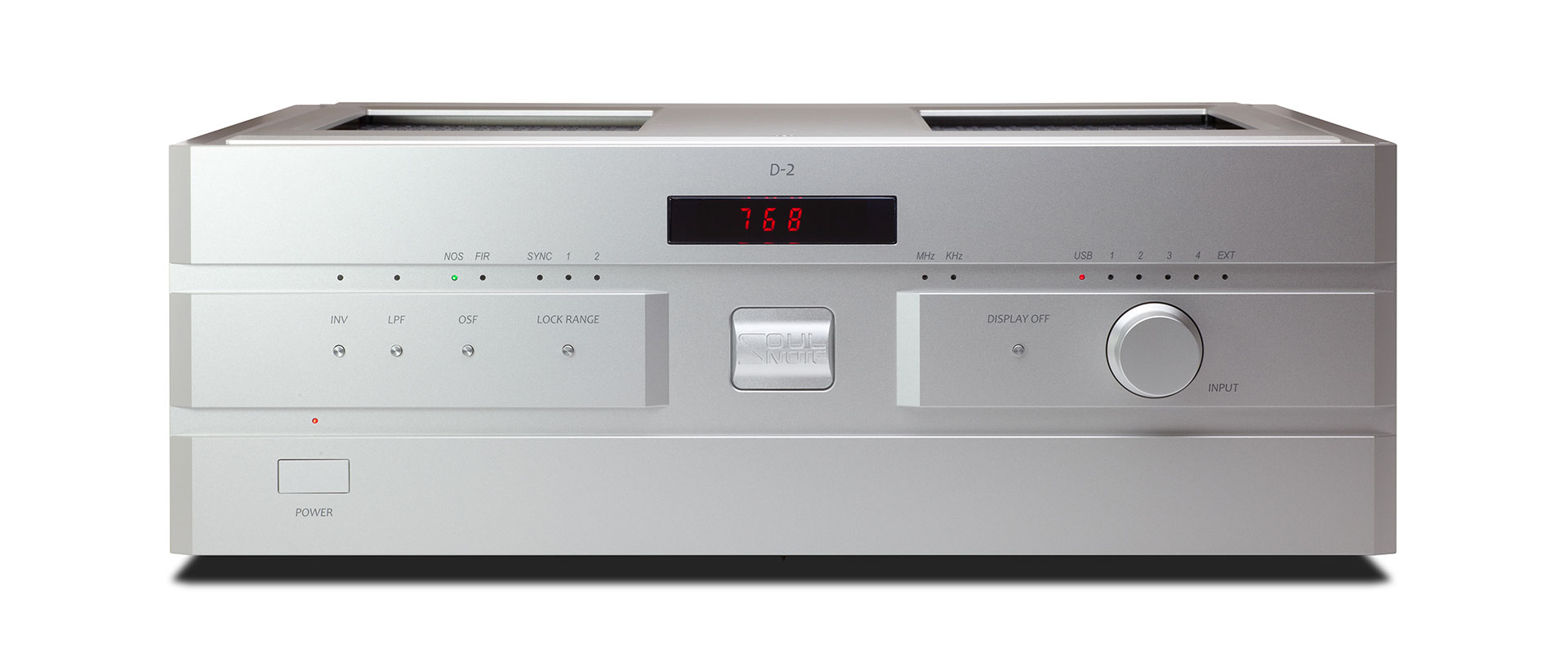
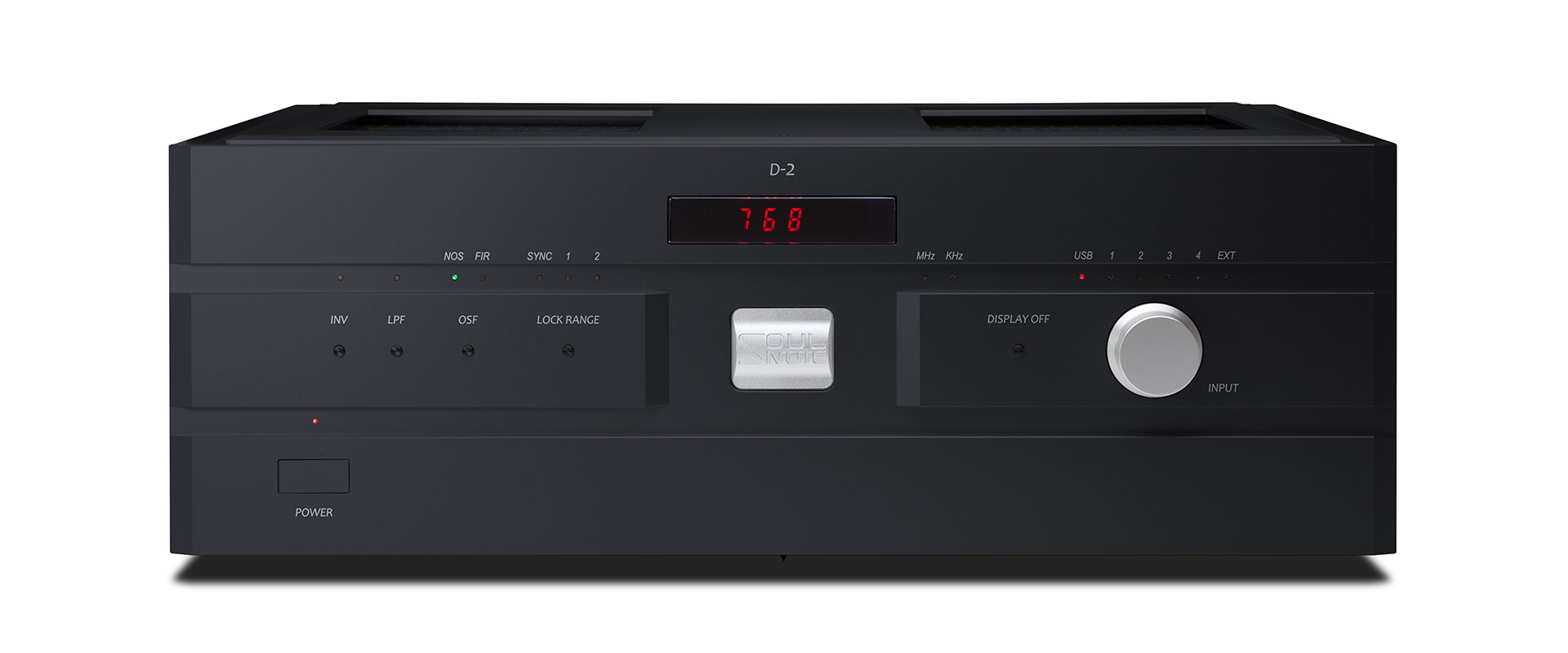
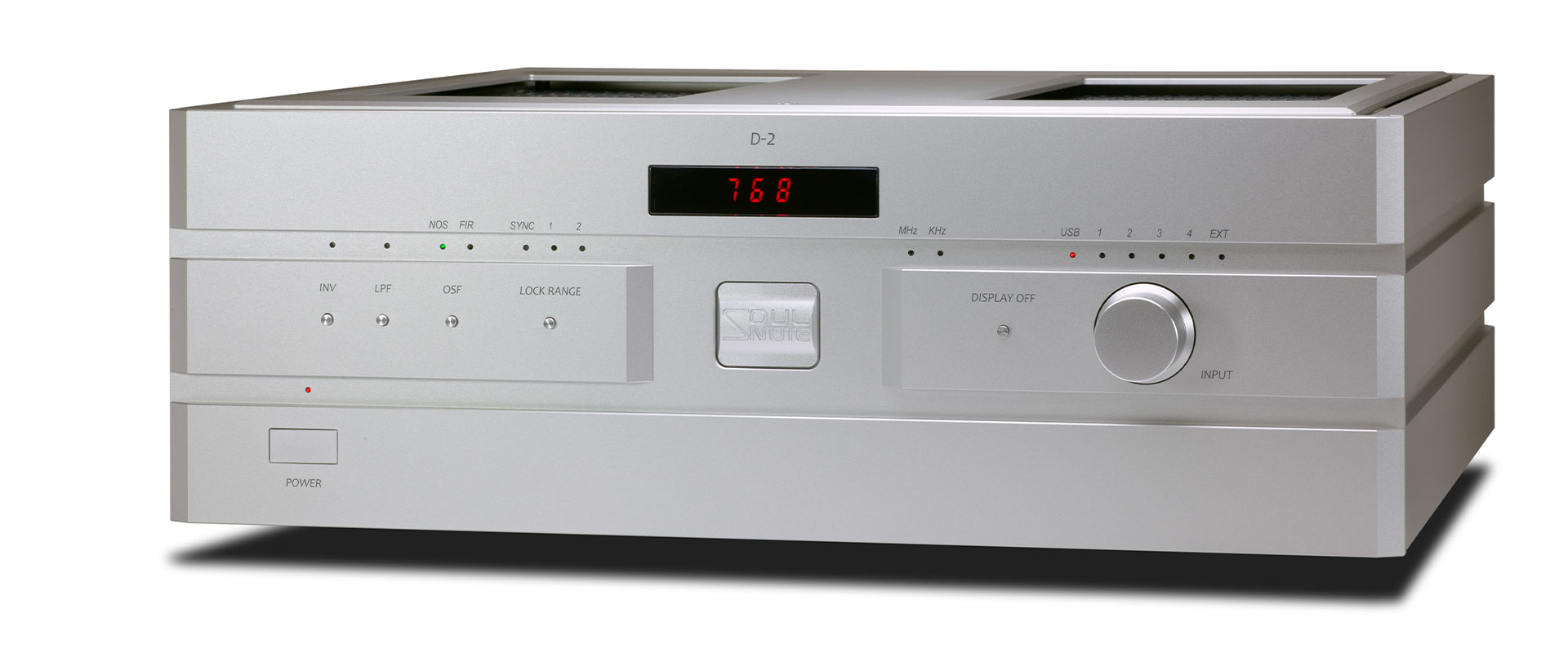
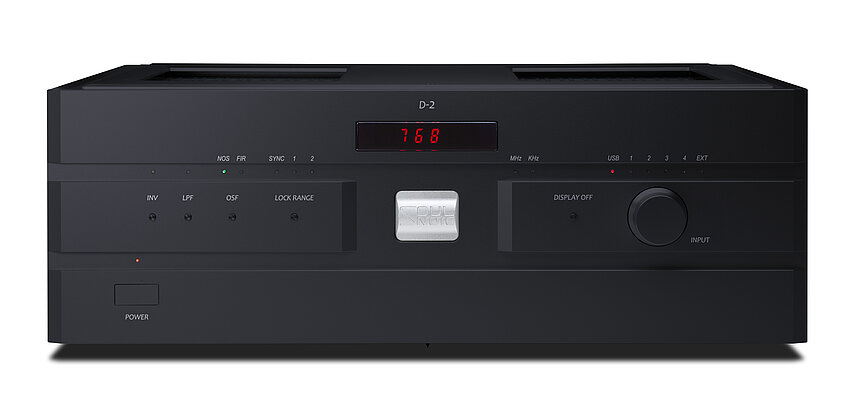
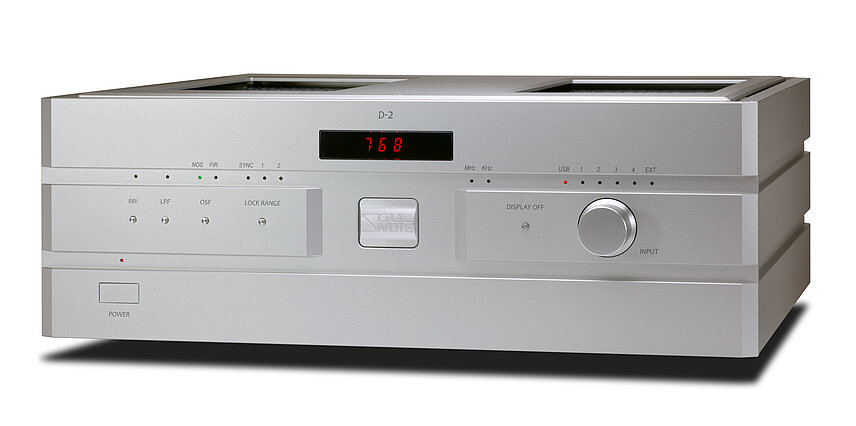
SOULNOTE D-2 ver.2
D/A CONVERTER Silver / Black
TECHNOLOGY
Twin Mono Construction with “New Type-R Circuit”
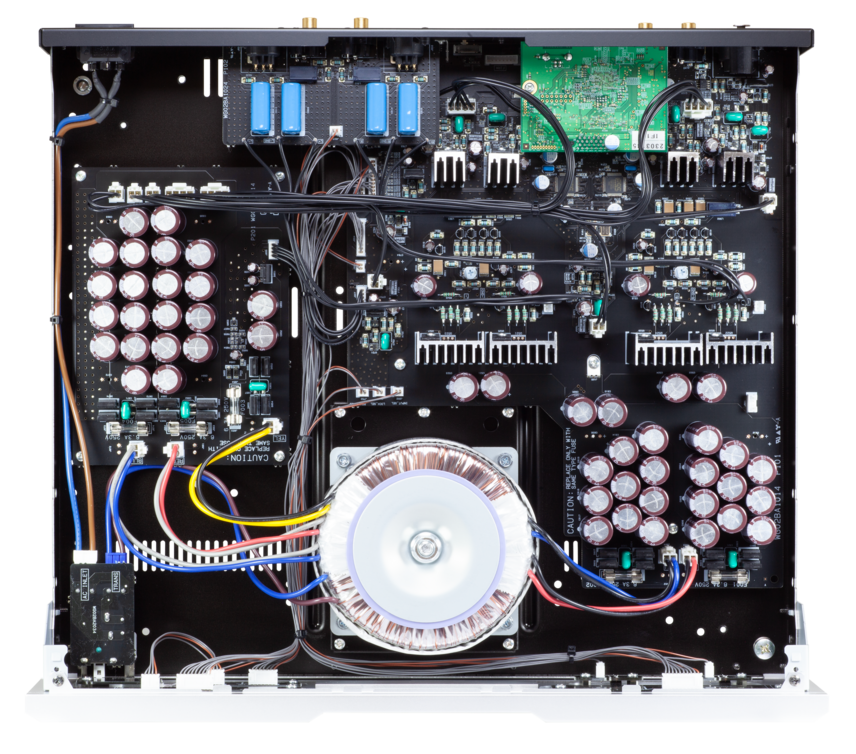
Featuring a massive, non-NFB discrete amplifier circuit comparable to a power amplifier, it incorporates the latest “New Type-R Circuit” — originally developed for SOULNOTE’s flagship phono equalizer E-3—refined specifically for the digital-to-analog-converter. This achieves a twin mono construction with power supplies and all components arranged separately for each channel.
LMX2594 from Texas Instrument for DDS
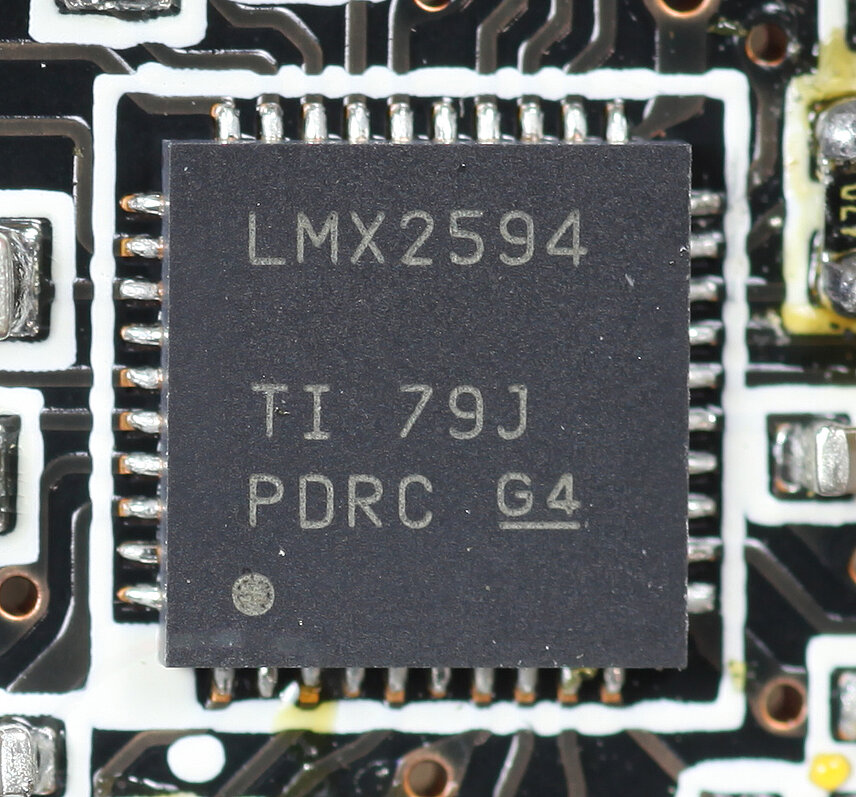
Texas Instruments' PLLatinum™ RF synthesizer LMX2594 is adopted for as an audio DDS.
It boasts world-leading specifications: a performance index of -236dBc/Hz and jitter of 45fs (femtoseconds, where 1 femto equals 1/1000th of a pico). This ultra-low jitter DDS enables overwhelmingly clear and profound spatial imaging, not only when using a high-precision external clock but also when utilizing the built-in TCXO.
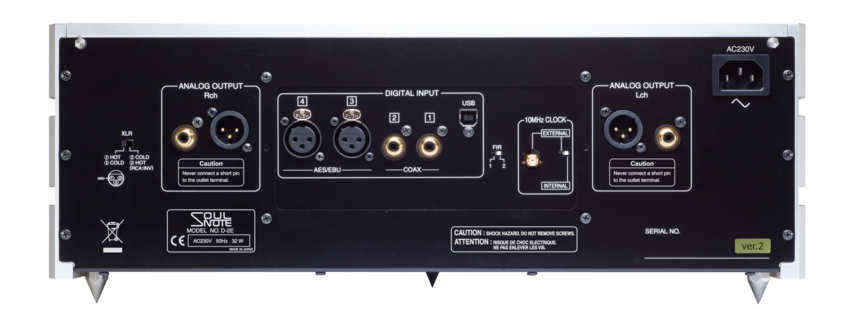
10MHz external reference clock input
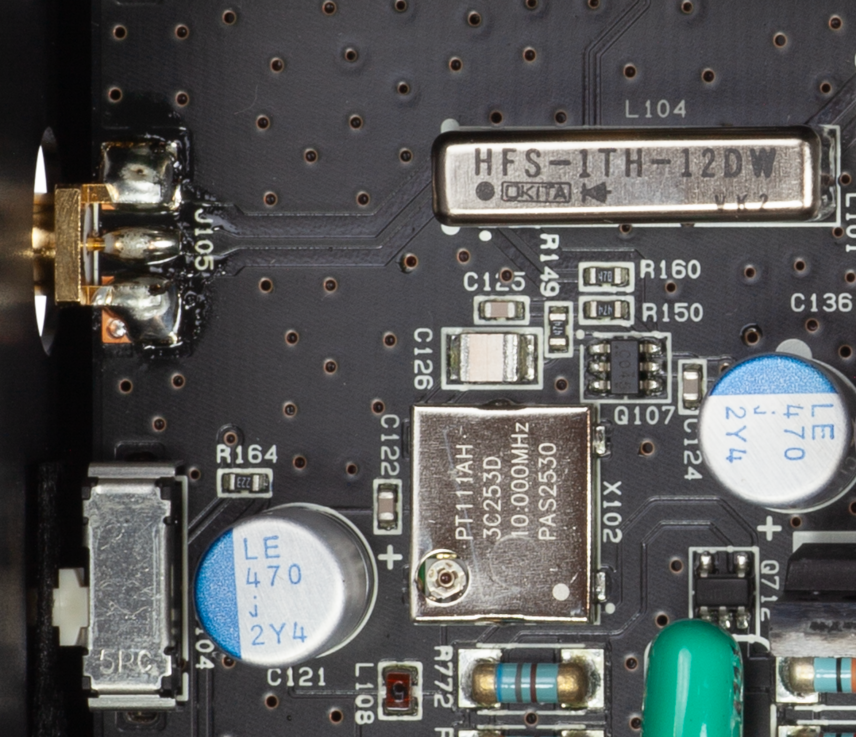
The internal clock employs a high-performance TCXO boasting excellent phase noise performance (-121 dB at 10 Hz offset). To avoid jitter introduced by ICs during switching between the internal and external clocks, a mechanical high-frequency relay with mechanical contacts is used. When using an external clock, the internal clock's power is turned off to stop oscillation, eliminating mutual interference.
The external clock terminal employs a SMA connector with enhanced high-frequency characteristics and reinforced construction. This eliminates the need for the conversion plug previously required when connecting the clock generator X-3. Using the X-3 dramatically improves sound quality across the entire frequency range.
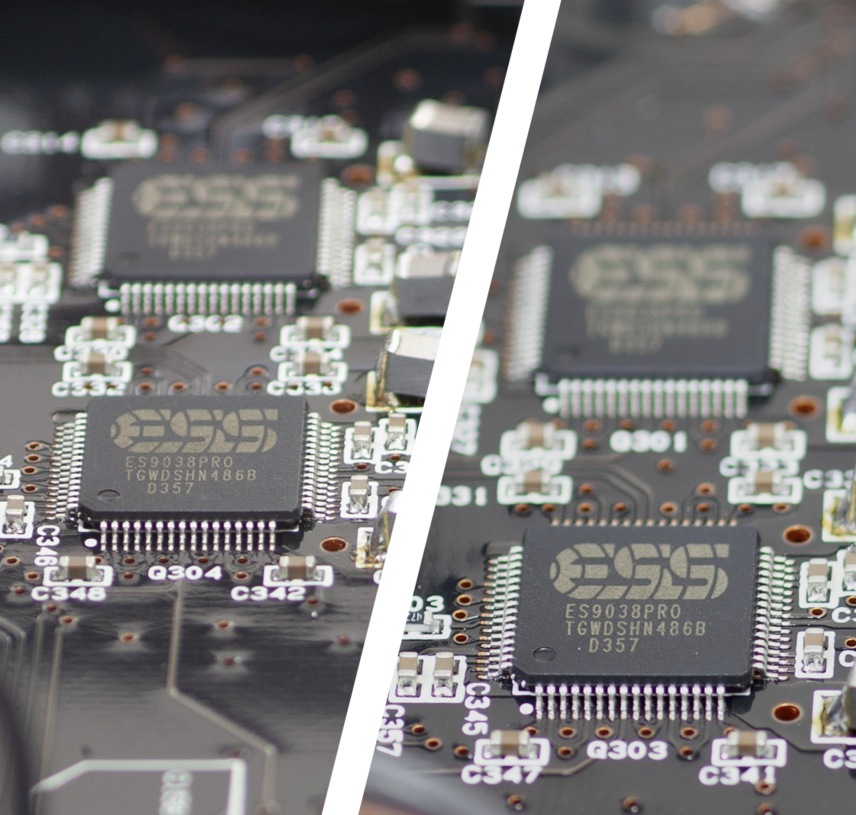
Resistor IV Circuit with ES9038PRO
Each channel employs two ES9038PRO chips, boasting a powerful 120mA output current. This enables IV conversion using a single low-resistance component. It eliminates TIM distortion, a common issue in feedback-type IV circuits, achieving a fully non-NFB D/A converter. The ES9038PRO utilizes synchronous mode to deliver the highest possible sound quality.
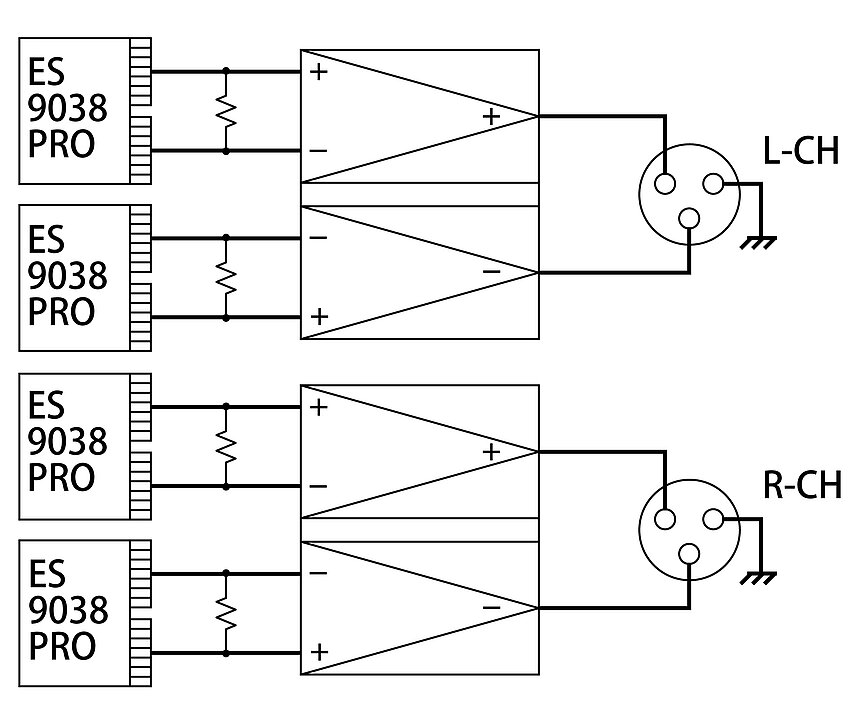
NOS mode
In addition to the conventional FIR oversampling mode, the D-2 ver.2 has adopted a NOS (non-oversampling) mode, which is a non-NFB version adapted to operate in the digital domain. When this mode is selected, the pre-echo and post-echo observed in the impulse response of FIR oversampling do not occur.
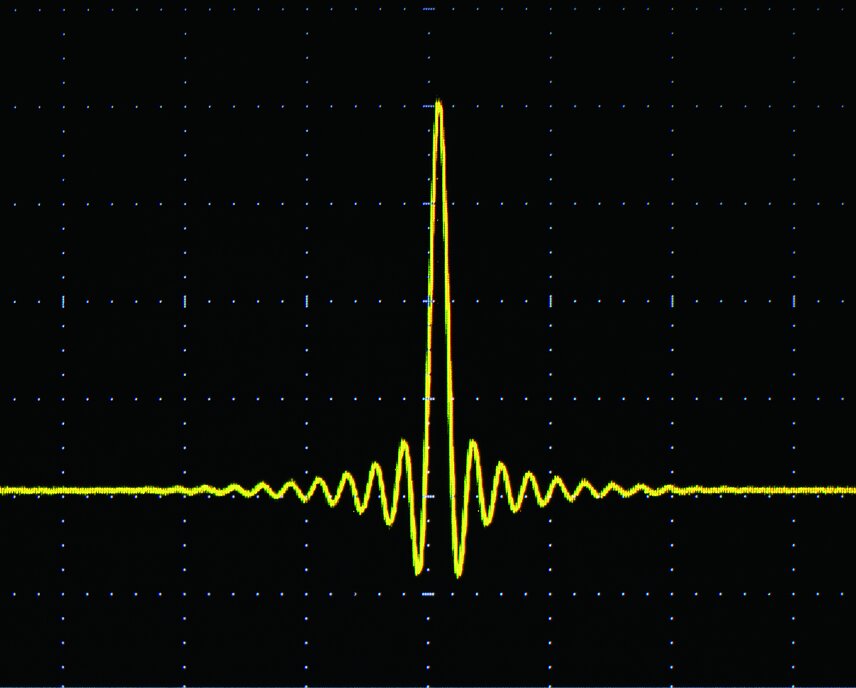
Impulse output waveform in FIR oversampling filter (analog output)
Pre- and post-echoes are artificial "sound" created by data calculations before and after the data is interpolated. They make waveforms like sine waves appear smoother, but calculation algorithms can affect the sound quality or ambiguity and be added to the time axis.
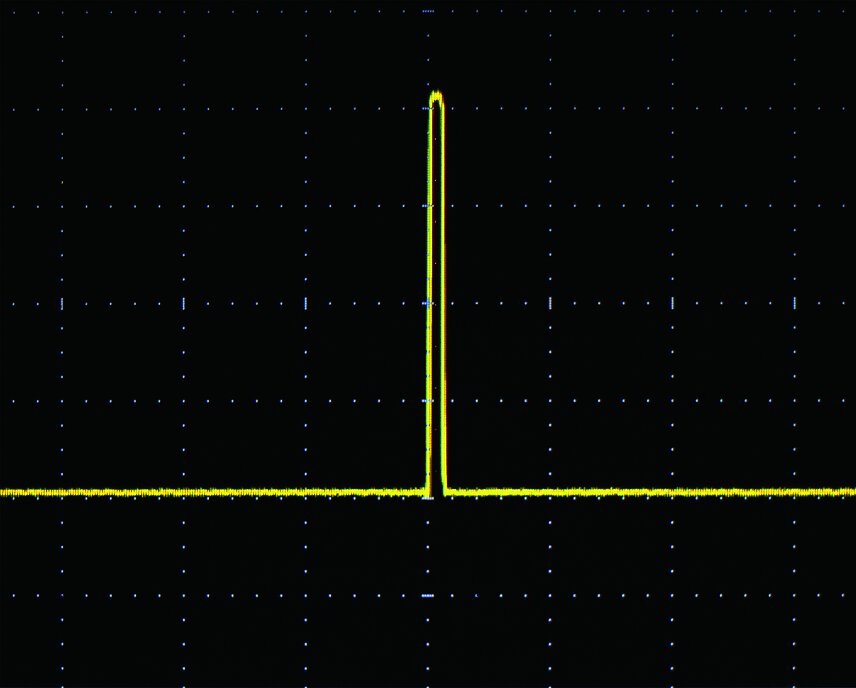
Impulse output waveform in NOS mode
This waveform can only be achieved through a combination with a non-feedback discrete amplifier that eliminates analogue filters. Because music waveforms are actually a series of impulse waveforms of different heights, the NOS mode eliminates any ambiguity in the time axis information, creating more realistic and natural sound quality and an expansive listening environment to the hearing acuity of humans, which is extremely sensitive to the time axis.
* The NOS mode cannot be used with DSD.
400 VA bifilar wound high-regulation toroidal transformers with eight windings on the secondary side
The D-2 ver.2 incorporates the power transformers with eight windings on the secondary side that are capable of regulation similar to that of very high-power amplifiers. Independent rectifier circuits in each stage prevent interference. Unnecessary vibrations from the power transformer are released outside the enclosure via a spike foot positioned directly beneath the transformer.
Noise countermeasures that don't rely on filters
The D-2 ver.2 uses 4 boards wrapped in 70-micron thick copper foil that eliminates noise by optimizing the printed circuit board layout. Noise countermeasures that don't rely on filters that can impact sound quality like ferrite, etc., are employed thoroughly, and each mode keeps unwanted radiatio
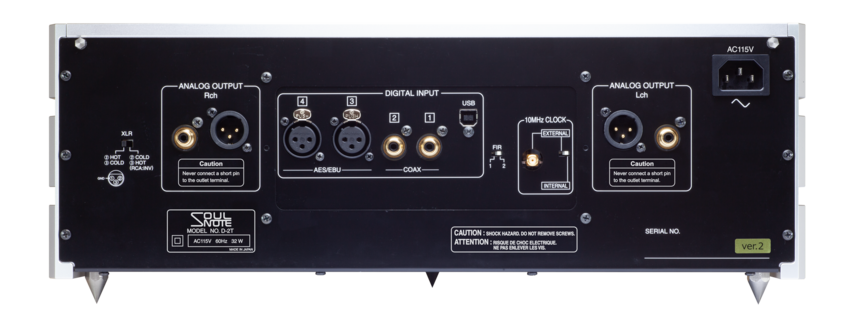
Rear panel
SPECIFICATIONS
| Input formal | |
| USB | PCM, DSD (DoP v1.1, ASIO Native) |
| Coaxial・AES/EBU | PCM, DSD (DoP v1.1) |
| Supported Sampling Frequencies | |
| USB | Max. 768kHz (PCM) / Max. 22.6MHz (DSD) |
| Coaxial・AES/EBU | Max. 192kHz (PCM) / Max. 2.8MHz (DSD64 DoP v1.1) |
| PCM quantization bit rate | |
| USB | 16-bit, 24-bit, 32-bit |
| Coaxial・AES/EBU | 16-bit, 24-bit |
| Digital Input | USB (Type B), Coaxial x2 (SPDIF), AES/EBU |
| External Clock Input | 10MHz (SMA 50 Ω) |
| Analog Output level | BALANCED x1, UNBALANCED x1 |
| Analog Output level (BALANCE) | 6.2 Vrms |
| Analog Output level (UNBALANCE) | 3.1 Vrms |
| Frequency characteristic | 2Hz to 20kHz (+0/-1 dB) |
| S/N | 110 dB |
| Total harmonic distortion | 0.04% (NOS/44.1kHz) |
| Analog filter | 1st-dimentional passive |
| Power Voltage | 230V AC 50Hz / 115V AC 60Hz |
| Power Consumption | 32W |
| Dimensions (Main Unit) | 430(W) × 160(H) × 405(D) mm |
| Weight | Approximately 17.0 kg |
| Accessories | Spikes, Power cable |


