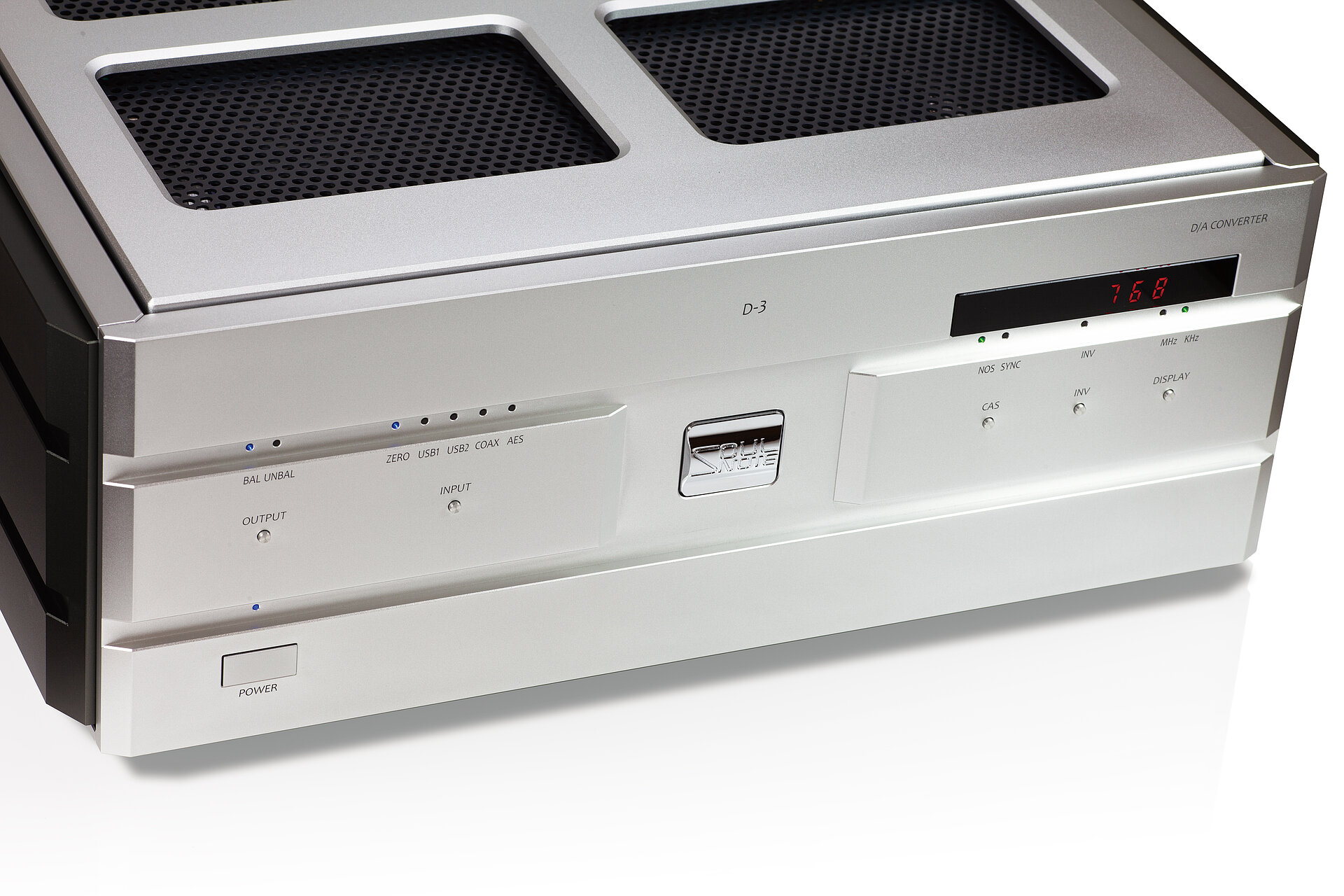
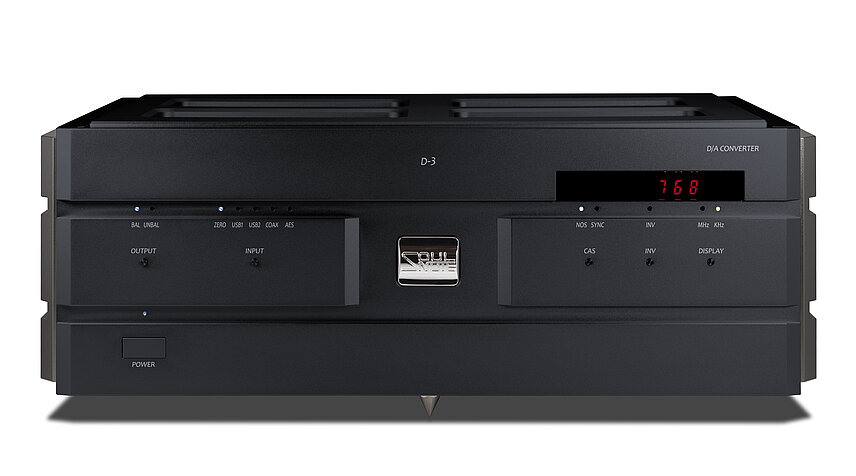
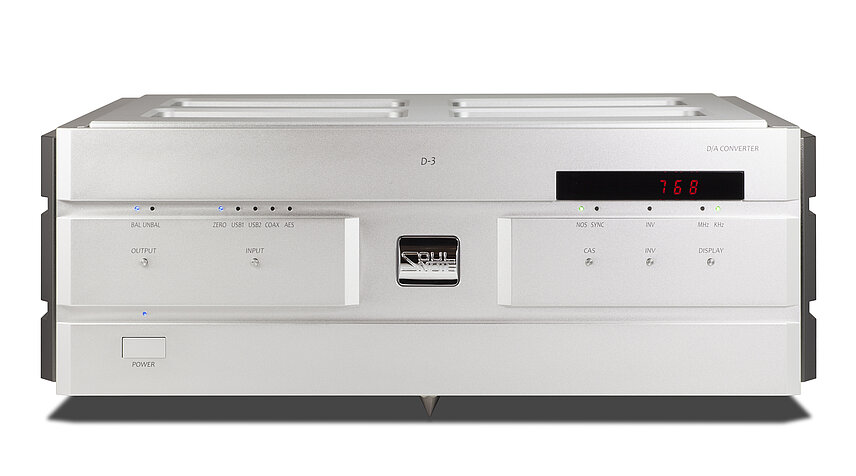
SOULNOTE D-3
The ultimate D/A converter with ZERO asynchronous circuits
TECHNOLOGY
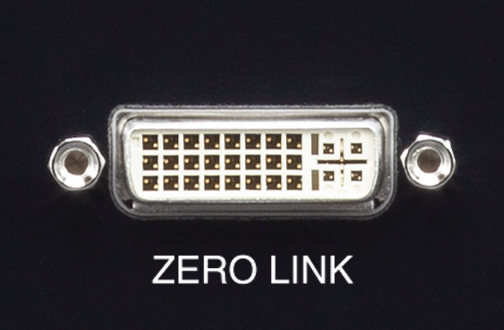
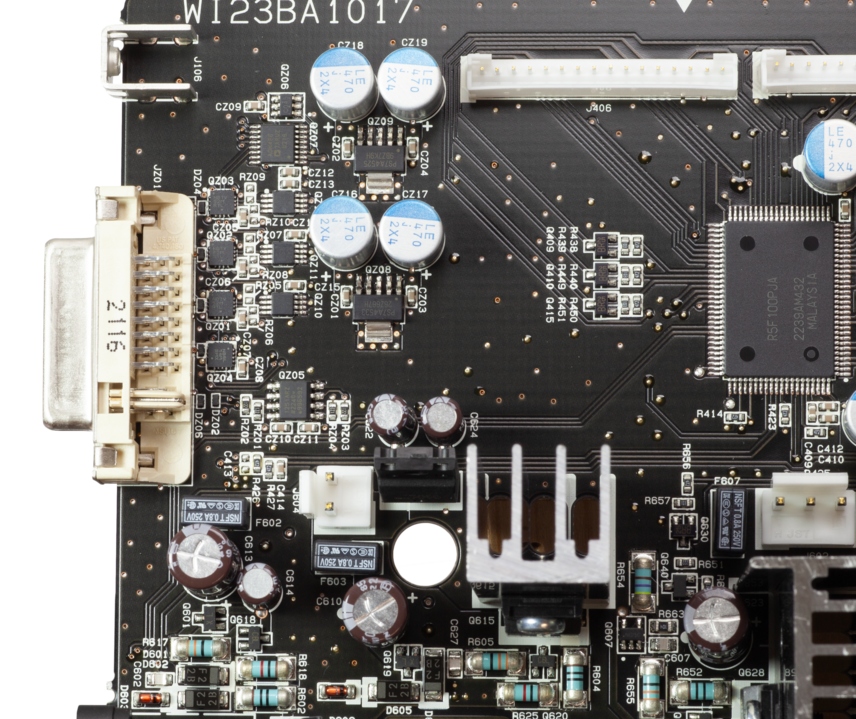
ZERO LINK
Connecting a network transport equipped with ZERO LINK creates a network system that is completely synchronized with the DAC clock, achieving dramatic improvements in sound quality by eliminating asynchronous circuits. The input from the ZERO LINK terminals connects directly to the DAC chip using a layout unique to ZERO LINK.
Clickhere for an explanation of ZERO LINK
Clickhere for ZERO LINK sound samples
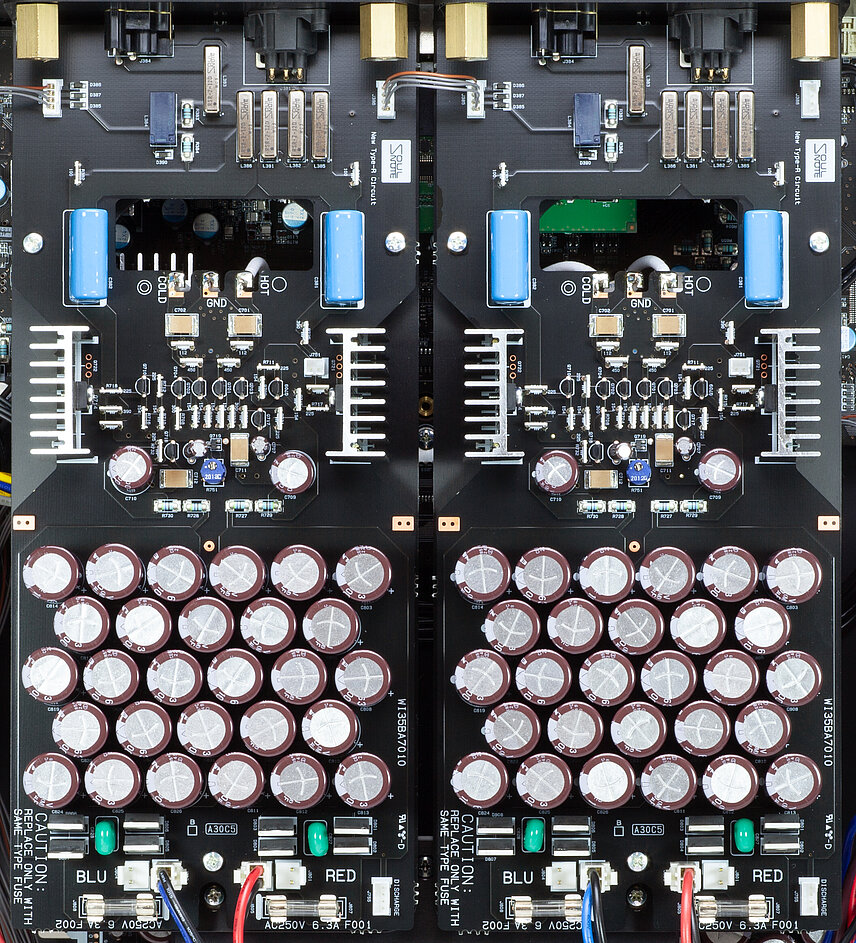
A dual monaural analog section
The analog circuit of the D-3 is a dual monaural construction using two identical circuit boards. It is also fully separated from the digital power supply, including the transformer. The mounting base for the aluminium circuit board is not fixed, laying the foundation for uninhibited and more impassioned sound quality. Analog circuit boards are mounted on independent right and left circuit board chassis and are also independent from the rear panel connectors.
New Type-R circuits inside the non-NFB balance amplifier
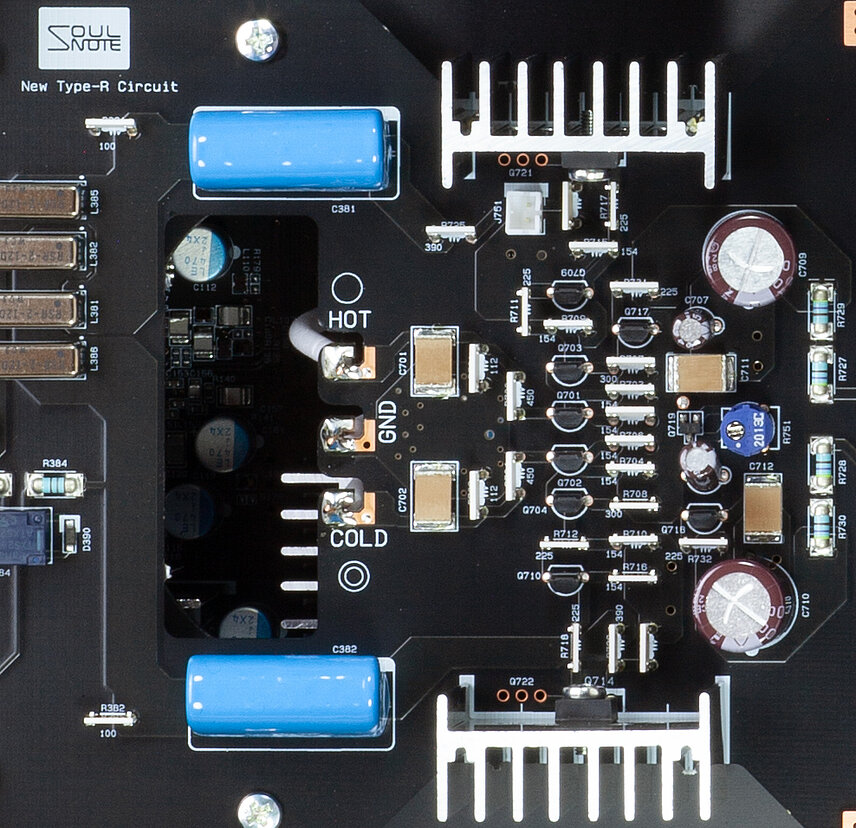
The output line amplifier uses New Type-R discrete grade non-NFB balance circuits. This circuit has no push-pull or bias circuit and is ultimately simple.It also includes the super high-quality naked foil resistors. With 3.9ohm output resistance, it delivers astonishing information detail and SN presence for superior power preamplifier drive capabilities.
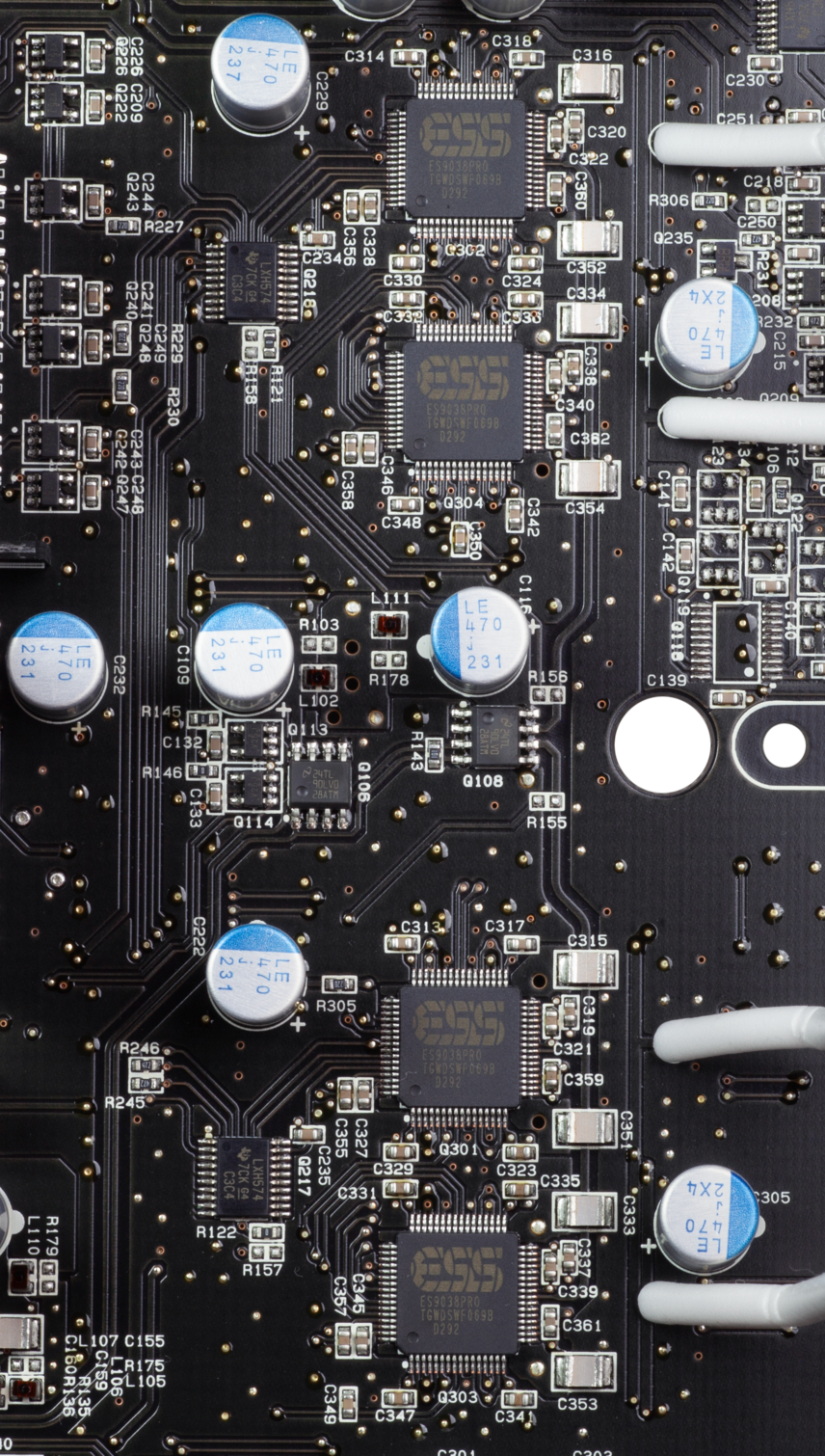
Four ES9038PRO circuits
Each channel in the DAC chip uses two ES9038PRO chips, for a total of four in the unit. Each channel’s incomparably powerful 120 mA current output is an essential element of the discrete non-NFB DAC. One current voltage conversion resistor uses naked foil resistors to convert current output into voltage directly before the first stage of the New Type-R circuit.
Dedicated external clock generator design
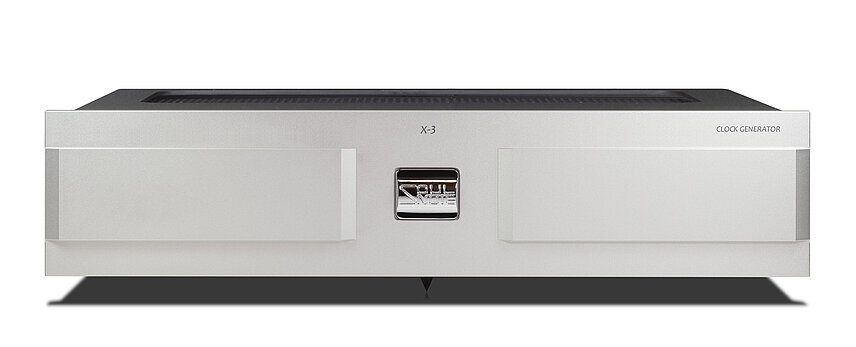
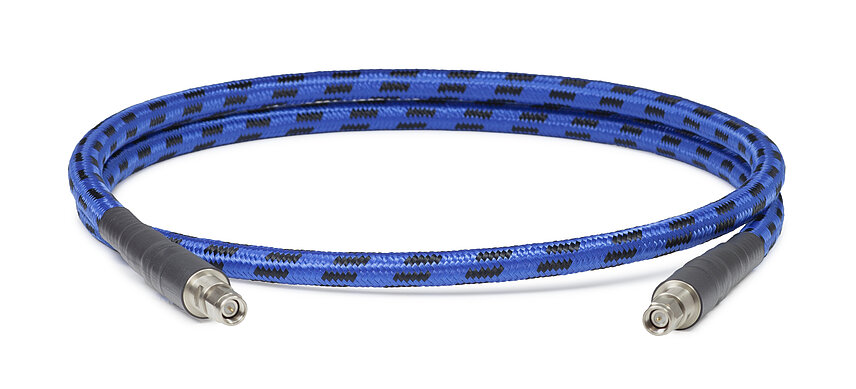
The D-3 features built-in ultra low jitter crystals and can link with the ultra high frequency external clock generator (10MHz) to further improve the accuracy of the time axis. It uses a high-frequency relay for switching the standard clock to eliminate any chance of additional jitter.The X-3 is the most suitable external clock generator for pure sound quality. We highly recommend the RCC-1 clock cable.
Femtosecond order DDS
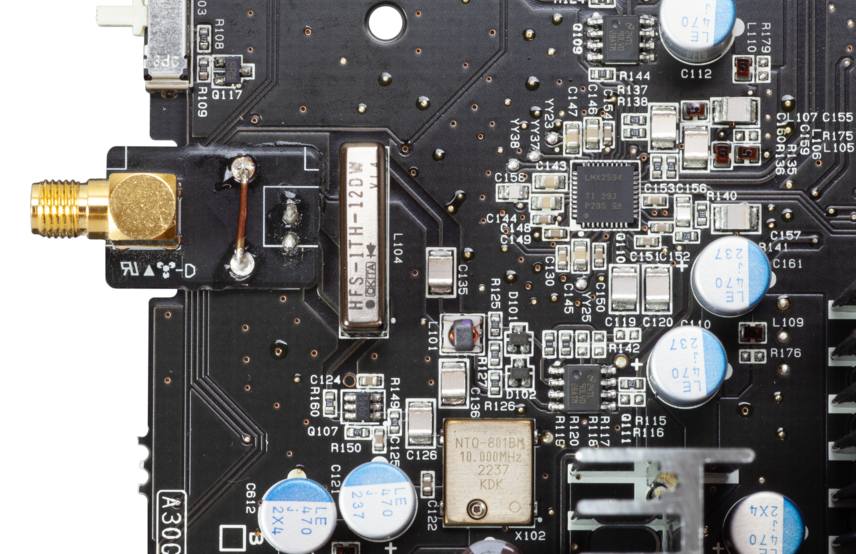
With its extremely low jitter of 45 femtoseconds, the DDS LMX2594 gives rise to a high-quality master clock that aligns sampling frequencies from the 10 MHz clock input. As a result, it can drive the ES9038PRO in Non-DPLL mode (128 femtoseconds), i.e. the best sound quality mode. By generating a master clock that matches each track’s sampling frequency transmitted from the transport during ZERO LINK, this achieves perfect synchronization with the transport without any use of PLLs or sampling rate converters.
Independent left-right grounding for power transformers
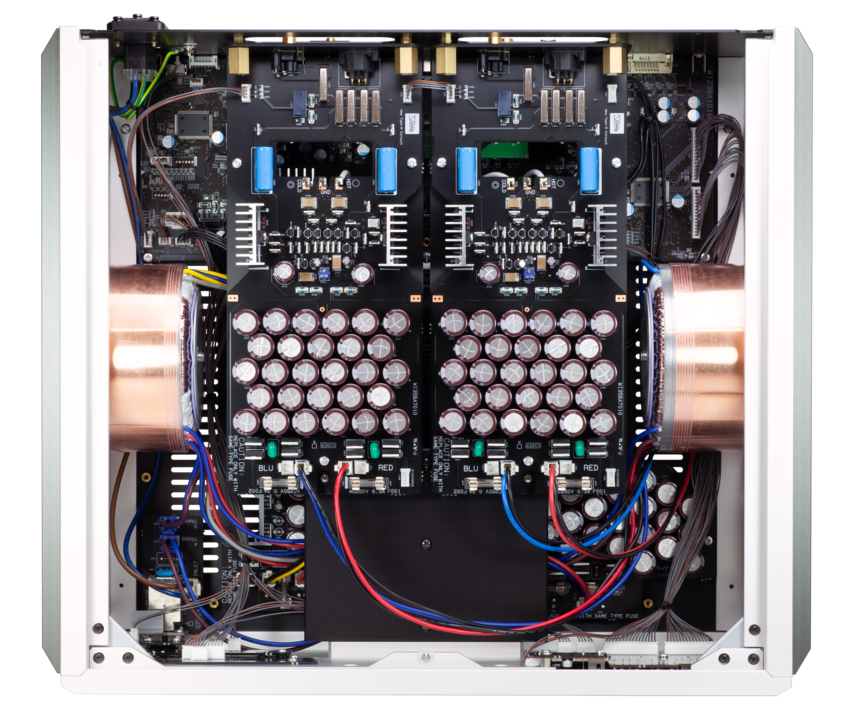
The power transformer with copper short ring is divided into independent transformers – digital and analog – with each section mounted independently on the side of an aluminium base that convey any transformer vibrations from each base to a grounding spike. Each of the transformers is mounted vertically in parallel with the circuit board to prevent possible noise interference in the circuits caused by leakage flux. A vital component of sound quality, the transformer base’s sandwich structure features an aluminium side floated at three points by titanium spacers and employs optimum materials, structure, and shape to eliminate resonance and avoid dumps. The 152 low-magnification electrolytic capacitors in the rectifier capacitor and 52 ultra high-speed SiC diodes in the rectifier diode demonstrate our unwavering dedication to sound quality. They constitute the core of this massive power supply.
NOS mode
The D-3 uses the highly acclaimed NOS (non-oversampling) mode. This mode does not generate the pre- and post-echoes observed in FIR oversampling. * The NOS mode cannot be used with DSD.
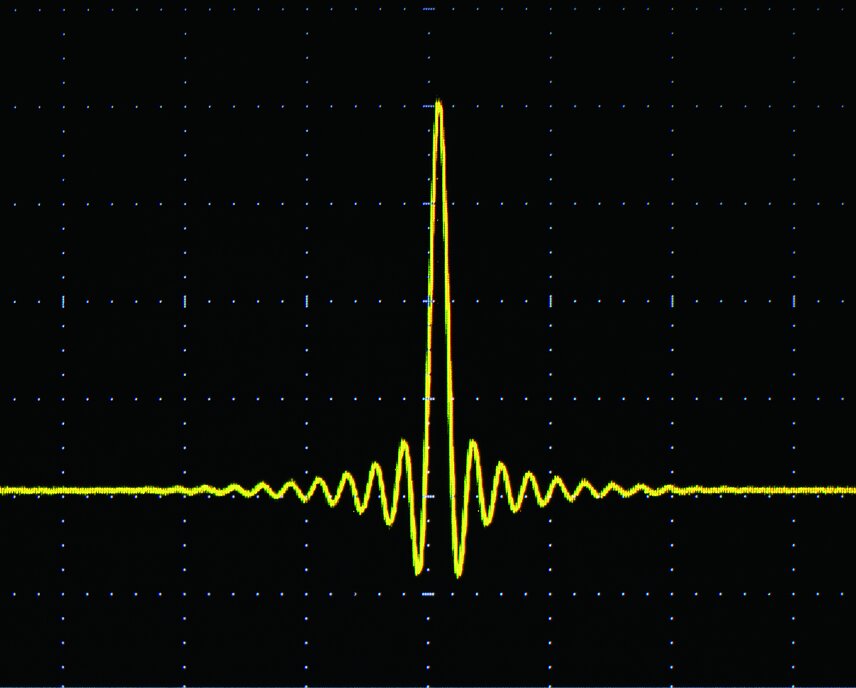
Impulse output waveform in FIR oversampling filter
Pre- and post-echoes are artificial "sounds" created by data calculations before and after the data is interpolated. They make waveforms like sine waves appear smoother, but calculation algorithms can affect the sound quality or ambiguity and be added to the time-axis.
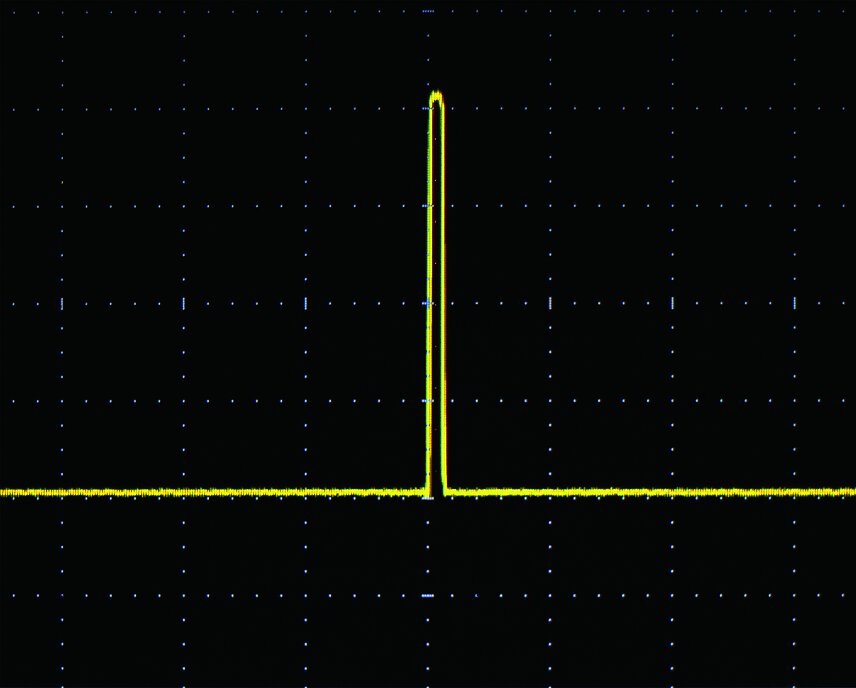
Impulse output waveform in NOS mode
This waveform can only be achieved by combining a non-NFB discrete amplifier with superb transient response performance. Because music waveforms are actually a series of impulse waveforms of different heights, the NOS mode eliminates any ambiguity in the time axis information, creating a more realistic and natural sound quality and an expansive listening environment to the human ear, which is extremely sensitive to the time axis.
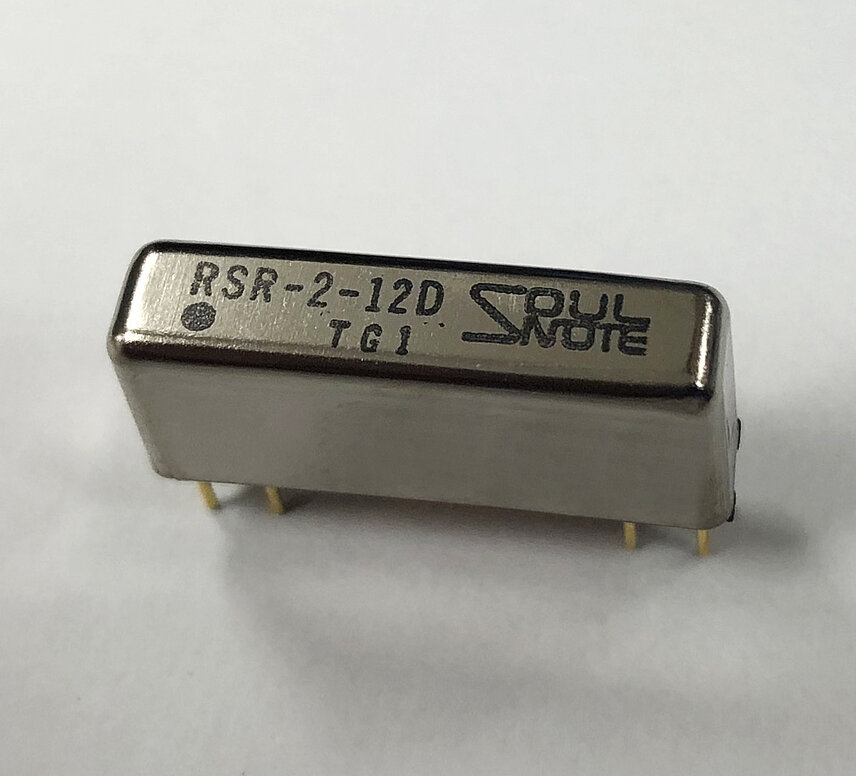
RSR-2-12D (Reference SOULNOTE Relay)
An ultra low loss glass tube sealed reed relay that performs similar to a mercury relay as a base has been further customized. This is an original custom relay created by SOULNOTE that can reach sound quality levels comparable to that of wire.
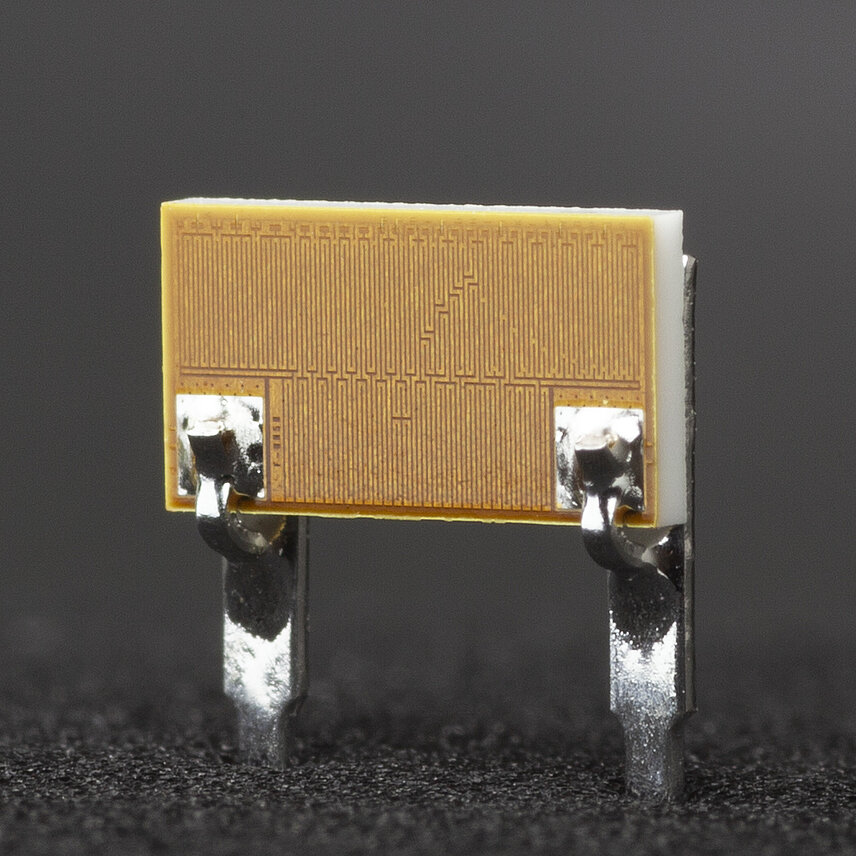
Ultra high-quality naked foil resistors
Artificial satellite grade ultra-high precision foil resistors with exceptional temperature properties have applied and have made additional customizations with an emphasis on sound quality. These ultra-high sound quality resistors were developed in-house and employ a naked foil design to eliminate dumps with mold resin.
Rear panel
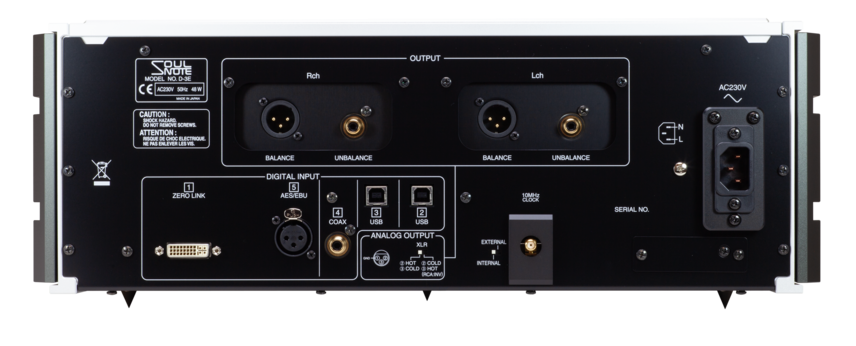
SPECIFICATIONS
| Supported sampling frequency(ZERO LINK,USB) | Maximum 768kHz(PCM)/Maximum 22.6MHz(DSD) |
| Supported sampling frequency (coaxial AES/EBU) | Maximum 192 kHz(PCM)/Maximum 2.8MHz(DSD64 DoPv1.1) |
| PCM quantization bit rate(ZERO LINK,USB) | 16bit,24bit,32bit |
| PCM quantization bit rate (coaxial AES/EBU) | 16bit, 24bit |
| Digital input | ZERO LINK, USB (Type B) 2,coaxial (S/PDIF), AES/EBU |
| *BULK PET,JPLAY supported(USB) | |
| External clock input | XLR 1, RCA 1 |
| Analog output | 16-bit, 24-bit, 32-bit |
| Analog output level (XLR) | 5.6Vrms |
| Analog output level (RCA) | 2.8Vrms |
| Frequency characteristic | 2Hz~120kHz (+0/-1dB) |
| S/N | 110dB |
| Total harmonic distortion | 0.008% (NOS/176.4kHz) |
| Analog Output level (UNBALANCE) | 3.1 Vrms |
| Frequency characteristic | 2 Hz to 20 kHz (+0/-1 dB) |
| S/N | 110 dB |
| Total harmonic distortion | 0.008% (NOS/176.4kHz) |
| Analog filter | Primary passive type |
| Power Voltage | 230V AC 50Hz |
| Power Consumption | 48W |
| Maximum external dimensions Main unit | 454(W)×189(H)×407(D)mm |
| Weight | 28.0 kg |
| Included accessories | Spike board, Spikes, Spacer(for Spike board floating), Remote controller, Power cable |


